Buying premium headphones has become a curious exercise. Manufacturers promise better drivers, smarter noise cancellation, high-resolution audio, AI-powered features and battery life that can stretch across several days. Yet the feature list rarely answers the question that matters when you put on your favourite song: does it actually sound good to you?
The Nothing Headphone (1) Pro makes that question particularly relevant.
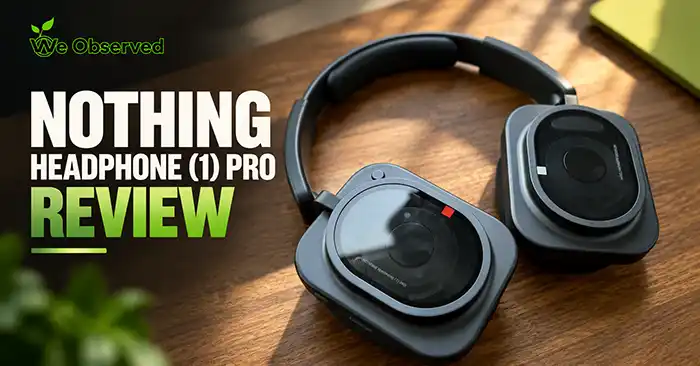
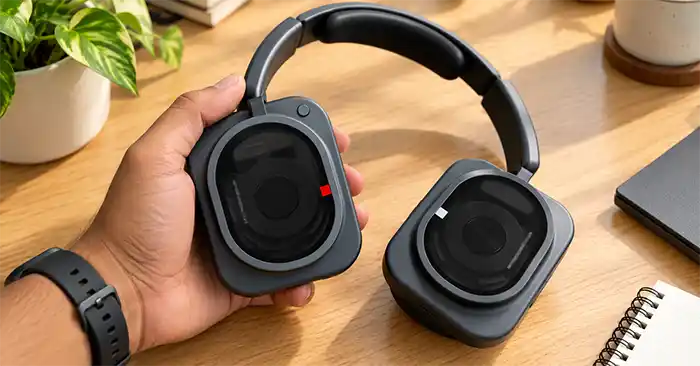
Priced at $399 in the US, the company’s latest over-ear headphones combine three drivers in each earcup, adaptive active noise cancellation, LDAC wireless audio, a parametric equaliser and a physical switch for Flat EQ. The design uses aluminium, titanium and glass, while the battery is rated for up to 68 hours with noise cancellation turned off.
It is an ambitious package. But it also asks buyers to pay a premium for an unusual acoustic design whose results have attracted sharply different reactions from audio reviewers.
My assessment is straightforward: the Headphone (1) Pro has a compelling feature set, but its biggest selling point is also the reason to audition it before buying. The technology is interesting. Whether it delivers the right listening experience is a more complicated question.
This Nothing Headphone (1) Pro review looks beyond the marketing claims to examine what the headphones offer, where the compromises matter, and which buyers should put them on their shortlist.
Nothing Headphone (1) Pro: Key specifications
| Feature | Details |
|---|---|
| Type | Over-ear, closed-back wireless headphones |
| Driver system | Three drivers per earcup |
| Driver configuration | 40mm dynamic bass driver, precision dynamic driver and xMEMS tweeter |
| Frequency response | 20Hz to 40kHz, manufacturer specification |
| Bluetooth | 6.1 |
| Bluetooth codecs | AAC, SBC and LDAC |
| Active noise cancellation | Adaptive ANC, claimed up to 46dB |
| Microphones | 10 total |
| Battery life | Up to 68 hours without ANC; up to 30 hours with ANC using AAC |
| Battery life with LDAC | Up to 53 hours without ANC; up to 28 hours with ANC |
| Fast charging | 5 minutes for up to 4 hours of playback with ANC off |
| Wired audio | USB-C digital and 3.5mm analogue |
| Water and dust resistance | IP52 |
| Weight | 327g |
| Colours | Black and white |
| Launch price | $399 / £349 / €349 |
Specifications and maximum performance figures are based on Nothing’s published information. Actual battery life and audio performance vary with settings, fit, connected devices, and usage.
Also Check:CMF Speaker M vs Speaker S: Which Portable Speaker Should You Buy?
Design: Premium materials, practical questions
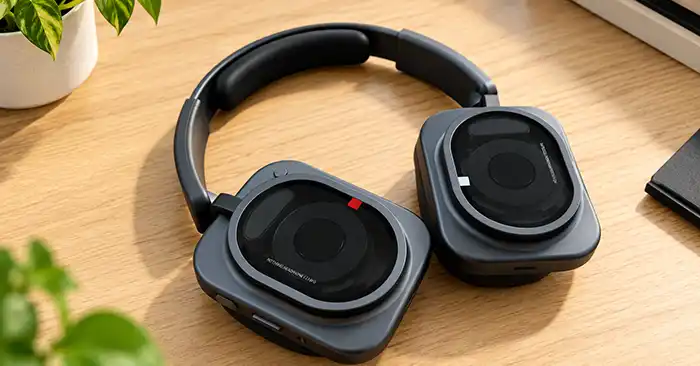
Nothing has always treated industrial design as part of the product experience. The Headphone (1) Pro continues that approach, but with a more restrained look than some of the company’s earlier transparent-style products.
The construction combines an aluminium frame, machined titanium arms and glass elements. At 327g, these are not especially light headphones, so comfort and weight distribution matter as much as the materials used.
The available reviews are encouraging here. Mark Ellis Reviews describes them as exceptionally comfortable, while Headphones.com also identifies comfort and ergonomics as strengths. SoundGuys gives comfort and fit a score of 8.0/10.
That is a promising start for people who spend hours listening while working, travelling or studying. Still, comfort is personal. A headphone that feels balanced on one head can create pressure on another, particularly around the temples, jaw or ears.
Physical controls are a genuine advantage
The controls are one of the more convincing parts of Nothing’s design philosophy. Instead of making every action dependent on tapping a touch-sensitive earcup, the headphones use tactile controls for functions such as volume, playback, track navigation and switching listening modes.
That matters more than it may sound. Physical controls can be easier to operate without looking, especially when walking, travelling or wearing gloves. They also reduce the guesswork that can come with touch gestures.
There are several controls to learn, and some users may find the arrangement busy. But the underlying idea is sound: a premium headphone should make everyday actions straightforward.
The case is the compromise you will notice when travelling
The carrying case is the least convincing part of the package.
Mark Ellis Reviews criticises its size and lack of dedicated cable storage, while the published dimensions confirm that it is a substantial accessory. Nothing lists the case at approximately 228.5 × 123 × 53mm and 383.5g. That is heavier than the headphones themselves.
The case provides protection, but it takes up meaningful bag space and does not charge the headphones. It also has no dedicated compartment for the included 3.5mm cable.
For home listening, this may be easy to overlook. For commuters and frequent flyers, portability is part of the product’s value. A headphone can be comfortable on the head and still be inconvenient to carry.
Design verdict: the headphones themselves appear thoughtfully made, but the case feels like a missed opportunity to make the whole package more travel-friendly.
Also check:10 Cybersecurity Tips for Everyday Users(2026)
Three drivers: A meaningful improvement or an unnecessary complication?
This is the question at the heart of the Headphone (1) Pro.
Most consumer over-ear headphones use one main driver per earcup. Nothing takes a different route, combining three drivers intended to handle different portions of the sound spectrum.
The system consists of:
- A 40mm dynamic driver for bass.
- A precision dynamic driver for the middle frequencies.
- A tiny xMEMS tweeter for high frequencies.
The idea is easy to understand: assign different parts of the sound to drivers designed for those jobs, rather than asking one driver to handle everything.
That sounds logical, but it is not automatically better. The drivers still need to work together as a coherent system. Their integration, acoustic behaviour, tuning and response to different earcup positions all affect the result.
The important point is that more drivers do not guarantee better sound. A carefully tuned single-driver headphone can outperform a poorly integrated multi-driver design. The only meaningful question is what reaches your ears.
What the listening reports reveal
Before revealing my thoughts, I want to include a summarized experience of a few more experienced sources.
Mark Ellis Reviews found the headphones lively and detailed, with powerful bass, bright vocals and good instrument separation. That reviewer also praised the EQ controls and dedicated Flat mode.
Headphones.com reached a much less favourable conclusion. Its reviewer reported excessive bass emphasis and a harsh treble resonance around 5kHz, arguing that the response could vary with fit and make EQ correction less reliable. SoundGuys also documented a fit-related caveat in its review and measurement data.
These differences do not prove that one reviewer is right and the others are wrong. Listening preferences differ, and headphone measurements can vary with the test fixture, placement, and individual fit. What they do show is that the sound may not be equally satisfying for everyone.
For a buyer, that uncertainty is more useful to know than the number of drivers inside the earcups.
I personally liked the sound output. It offers perfect balance, richness, loudness, and customization if needed. The flat EQ feature is really helpful, and the bass output is awesome.
What does this mean for your music?
If you enjoy a bold, energetic presentation, the reported bass emphasis may appeal to you. If you are sensitive to sharp treble or prefer a more natural presentation, you should pay particular attention to cymbals, snare drums, high-pitched vocals, and other bright sounds.
Try several familiar tracks rather than judging the headphones with one song. A sound signature that feels exciting for a few minutes can become tiring during a long listening session.
If you cannot audition them, check the seller’s return policy before purchasing. With a product whose sound reports differ this much, the ability to return it is a meaningful part of the buying decision.
Flat EQ and parametric EQ: The features that could make the difference
Nothing has included two features that deserve more attention than a simple list of codec and driver specifications.
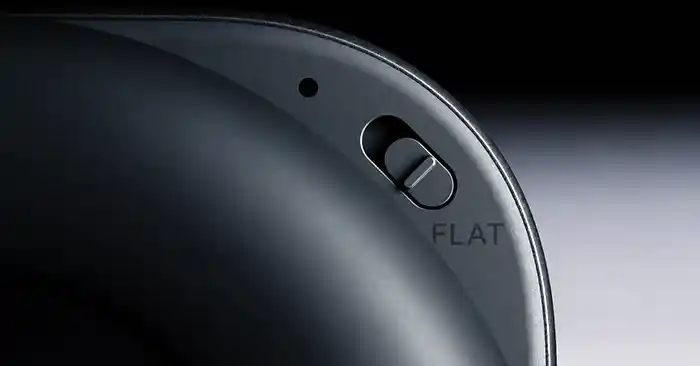
The first is a dedicated physical switch for Flat EQ. The second is the parametric equaliser in the Nothing X app.
Together, they give users more control over how the headphones sound.
What the Flat switch actually offers
The physical Flat switch allows users to move between the regular sound profile and a flatter EQ setting developed with input from Metropolis Studios.
For people who create music, edit audio, or simply prefer a less enhanced presentation, a quick way to compare profiles is useful. You do not need to open an app and hunt through menus every time you want to switch.
But there is a crucial distinction: a mode named Flat is not a universal guarantee of perfectly neutral sound. It describes a tuning profile, not proof that every frequency will be reproduced accurately for every listener.
That distinction becomes especially important when the acoustic response changes with fit.
Also check:diib Review 2026: Is This Automated SEO Tool Worth It?
Parametric EQ is powerful, but it cannot solve everything
A parametric equaliser lets you adjust particular frequency regions with more precision than a handful of broad bass and treble sliders. That is a welcome inclusion, and it gives users room to tailor the sound to their preferences.
Yet EQ is not magic. It works best when the problem being corrected is reasonably predictable. If a resonance shifts with earcup placement or differs substantially between listeners, a fixed correction may not produce the same result every time.
This is the central criticism raised by Headphones.com: the reviewer found that the reported treble issue and response variability limited how confidently the EQ could correct the sound.
The practical lesson is not to dismiss EQ. It is to treat EQ as a useful tool, rather than a guarantee that any tuning issue can be fixed.
For casual listening, that flexibility may be enough. For critical audio work, I would want to test the headphones carefully before relying on them as a reference.
Noise cancellation: One of the strongest reasons to consider the Pro

The Headphone (1) Pro advertises adaptive active noise cancellation of up to 46dB, supported by a 10-microphone system.
That maximum figure needs context. Noise cancellation varies by frequency and environment, and a single peak number cannot fully describe how effectively a headphone handles an aircraft cabin, a busy road, or voices in an office.
The available evidence is nevertheless positive. SoundGuys rated the Headphone (1) Pro’s noise cancellation 8.7/10. Its lab comparison placed the result ahead of 87% of the 60 over-ear headphones it had measured for that comparison.
That gives the Pro a meaningful advantage for commuters, office workers and frequent travellers.
Good ANC reduces persistent background noise, such as engine rumble, fans and air-conditioning. It can make listening less tiring because you do not need to raise the volume as much to hear your music clearly.
Transparency mode is also important. It allows outside sound to pass through the headphones when you need to hear an announcement, speak to someone or remain aware of your surroundings.
Neither feature makes the world disappear. Voices, sudden sounds and some higher-frequency noise may still come through, and performance depends on a good seal around the ears.
ANC verdict: the noise-cancellation performance is one of the better-supported strengths of the Headphone (1) Pro. If isolation is high on your priority list, it deserves serious consideration.
Battery life: Excellent on paper, with one important trade-off
Nothing rates the Headphone (1) Pro for up to 68 hours of playback with ANC off and up to 30 hours with ANC on using AAC. If you use LDAC, the claims fall to 53 hours without ANC and 28 hours with ANC.
| Listening setup | Claimed battery life |
|---|---|
| AAC, ANC off | Up to 68 hours |
| AAC, ANC on | Up to 30 hours |
| LDAC, ANC off | Up to 53 hours |
| LDAC, ANC on | Up to 28 hours |
The headline figure is impressive, but the ANC-on result is more relevant to buyers who plan to use these as everyday travel headphones.
SoundGuys noted that the cheaper Nothing Headphone (1) had a higher official ANC-on battery rating of 35 hours, compared with 30 hours for the Pro. The older model also lasted longer than its official estimate in SoundGuys’ own test, though that does not establish how the Pro will perform in equivalent testing.
This is worth considering. A more expensive model should not automatically be assumed to last longer simply because it sits higher in the range.
Nothing also claims that a five-minute charge provides up to four hours of playback with ANC off, or up to two hours with ANC on. These are maximum figures under the company’s test conditions, not guaranteed results for every listening setup.
For most buyers, the battery should be more than adequate. But if you spend long days travelling with ANC enabled, compare the ANC-on figures rather than buying on the 68-hour headline alone.
Also check:Screentime to Cash on TikTok: What It Is and How to Deal With It
Bluetooth 6.1, LDAC and wired listening: Which features will you actually use?
The Headphone (1) Pro supports Bluetooth 6.1, AAC, SBC and LDAC, along with multipoint connectivity for two devices.
LDAC can transmit audio at higher bitrates than basic Bluetooth codecs when the source device and connection support it. But the codec alone does not guarantee an audible improvement. The recording, streaming service, playback device and headphones all matter.
Multipoint is arguably more useful for everyday life. You can stay connected to a laptop and phone, making it easier to move between a video call and incoming calls without repeatedly pairing devices.
The headphones also support USB-C digital audio and a 3.5mm analogue connection. Nothing specifies USB-C audio up to 24-bit/192kHz and AUX audio up to 24-bit/96kHz. The actual signal format depends on the connected source and its capabilities.
For casual listeners, these options provide flexibility. For creators, wired listening may be useful when working with compatible audio equipment.
One caution: high-resolution support is not the same as guaranteed high-resolution sound quality. It describes a supported format, not a complete verdict on how the headphone reproduces it.
Calls, durability and everyday use
The headphones have 10 microphones in total, with Nothing describing a microphone system designed to improve calls and noise cancellation. Mark Ellis Reviews considered the microphone performance acceptable, while noting that it was not the strongest feature of the product.
If calls are central to your working day, test the microphone in the conditions you use most: a quiet room, a busy office, or outdoors in wind. Microphone quality can change significantly with background noise.
The IP52 rating offers limited protection against dust and dripping water under defined conditions. It does not mean the headphones are waterproof or suitable for swimming. Treat the rating as a little extra protection for ordinary use, not permission to expose them to heavy rain or immersion.
The 327g weight is another practical consideration. The reported comfort is promising, but a long-term fit test is more useful than a specification on its own.
Is the Nothing Headphone (1) Pro worth $399?
At its US launch price of $399, the Headphone (1) Pro sits in a competitive premium category. It needs to justify its price through the full experience, not just through unusual hardware.
Its strongest case is the combination of adaptive ANC, extensive EQ options, physical controls, multipoint connectivity, and long claimed battery life. The Flat switch is particularly interesting for users who want to compare listening profiles quickly.
Its weakest point is the uncertainty around sound consistency. If the stock tuning suits your ears, you may be very happy with it. If the treble feels harsh or the sound changes noticeably with fit, the EQ may not provide the effortless fix you hoped for.
Who should consider buying it?
The Headphone (1) Pro makes the most sense for:
- Commuters who value effective ANC and transparency mode.
- Office workers who switch between a laptop and phone.
- Listeners who enjoy lively sound and like adjusting EQ.
- Technology enthusiasts who appreciate physical controls and distinctive design.
- Music creators who want to experiment with different sound profiles, provided they verify its suitability for their workflow.
Who should think twice?
I would be more cautious if you:
- Prefer natural, consistent sound with minimal tuning.
- Are sensitive to bright or sharp treble.
- Need a dependable reference headphone for mixing or mastering.
- Travel frequently and want a compact carrying case.
- Expect the higher price and three-driver design to guarantee better sound than simpler alternatives.
What about the competition?
The right comparison depends on what you want to improve over your current headphones. Do not compare premium models solely by driver count, ANC decibel claims, or supported codecs.
- Nothing Headphone (1): worth comparing if you want Nothing’s physical controls and software features but do not need the Pro’s three-driver system. The original model’s official ANC-on battery claim is higher, at 35 hours, although real-world results depend on use.
- Apple AirPods Max 2: a relevant alternative for buyers in Apple’s ecosystem. Headphones.com preferred its overall sound to the Nothing Pro in the supplied review, though personal preference and price remain important.
- Bose QuietComfort Ultra (2nd Gen): worth auditioning if comfort and noise cancellation are priorities. The supplied Headphones.com review preferred its overall sound presentation after using Bose’s CustomTune feature.
- Sennheiser HDB 630: worth considering for buyers who put sound quality and listening refinement ahead of unusual hardware design. The supplied Headphones.com review favoured it for its sound.
These are not universal rankings. They reflect the available review evidence and illustrate why the best choice depends on the qualities you value most.
How to test the Headphone (1) Pro before buying
If a store offers a demonstration, do not spend the entire session listening to a single bass-heavy track. Use familiar music and check the details that could make or break your experience.
- Listen to vocals. Are voices clear and natural, or do they sound overly bright?
- Check treble comfort. Use tracks with cymbals, snare drums and sharp consonants. Listen for any harshness that becomes tiring.
- Try different fits. Adjust the earcups and headband. Notice whether bass, treble, or ANC changes significantly.
- Test the EQ. Switch between the default profile and Flat mode, then try the app’s equaliser.
- Check ANC and transparency. Test both in a setting with steady background noise and while speaking.
- Wear them for a while. Look for pressure, heat buildup, and discomfort rather than judging comfort in the first minute.
- Handle the case. Check whether its size works with your daily bag and whether you can conveniently carry the cables.
- Confirm the return policy. If you cannot test them before buying, a clear return window reduces the risk of ending up with a sound signature you dislike.
These steps are more useful than trying to decide from a frequency-response chart alone. Measurements help explain behaviour, but your comfort and listening preferences still matter.
Final verdict: Buy the sound, not the story
The Nothing Headphone (1) Pro is an ambitious pair of headphones. Its adaptive noise cancellation, physical controls, parametric EQ, Flat mode, wired audio options, and long claimed battery life make it a serious contender in the premium category.
But the three-driver system should not be treated as proof of superior sound. The available Nothing Headphone (1) Pro Review shows why: one listener’s lively, detailed presentation is another listener’s potentially harsh and inconsistent experience. SoundGuys’ testing also highlights how much fit can influence the result.
That leaves buyers with a fairly clear decision.
Buy the Nothing Headphone (1) Pro if its sound suits you, its controls and ANC meet your needs, and you value the flexibility it offers. Think twice if you are paying mainly for the three-driver design or expect the EQ to solve every possible tuning issue.
At $399, it deserves to be judged by what you hear and how comfortably you can live with it, not by how impressive its specification sheet looks.
The best premium headphones are the ones you stop thinking about once the music starts. The Headphone (1) Pro has plenty of technology to make that happen, but whether it gets there depends on your ears.
Must check:Instagram Posting Crypto Stories? Fix the No-Login Hack
Review Transparency: I haven’t purchased this product myself, but I had the opportunity to use it for a week. This Nothing Headphone (1) Pro Review combines my personal experience with independent research, published specifications, and additional data to provide a balanced, practical assessment for potential buyers.