2025 is a year that is life-changing for many, either good or bad. People will remember for so long, either for wars, tariffs, losses of lives, inventions, brave decisions, or growth. We have seen and heard about the loss of lives for a while in these years, so now let’s keep it aside and focus on the best new Inventions 2025.
These best inventions in science and technology 2025 are the only things which are giving hope for a better future. Whether it is finding an Ayurveda’s possible cure for Parkinson’s disease or improving battery technology. Something throughout has kept us motivated to move on. And just like every year, we are here with a collective list of Best New Inventions 2025.
Best New Inventions 2025

Here is our list of the best new inventions 2025. This list is completely research-based and also includes a link to the source at the bottom of each new invention in science and technology. So, feel free to go through this list and to know more about these latest inventions, click on the given link. So, without further ado, let’s take a look at the first invention.
Also Check:Boat Airdopes 141 Review : Affordable Earbuds for Everyday Use
Turning Cancer Cells Back to Healthy

In what’s being called one of the best new inventions in science and technology 2025, researchers in South Korea have pulled off something truly remarkable – they’ve figured out how to reprogram cancer cells into healthy ones, without using chemo or radiation. The team at KAIST, led by Professor Kwang-Hyun Cho, built an AI tool called BENEIN that maps out how genes behave inside our cells. Using this, they discovered that switching off just three specific genes can stop colon cancer cells from spreading – and actually make them behave like normal, healthy gut cells again.
Instead of the usual “kill the cancer” approach, this method gently re-educates the cells at a genetic level. Early animal tests showed smaller tumors and healthier tissues, with no harsh side effects. Even better, this approach may work for other types of cells too, like brain or immune cells. It’s still early days, but if this continues to succeed, it could completely change how we fight cancer in the future.
Ayurveda’s possible cure for Parkinson’s disease
Parkinson’s is a tough neurological condition that slows movement, causes tremors, and affects daily life. While modern medicine helps manage the symptoms, it often comes with side effects and doesn’t stop the disease from progressing.
That’s where Ayurveda steps in with a gentler, holistic approach. By balancing the body’s Vata dosha, Ayurvedic treatments – using herbs like Ashwagandha, Mucuna, and Turmeric, along with therapies like massages and detox routines – aim to ease symptoms and boost overall well-being.
Also Read:Humans Are Not the Problem; Definitions Are
Many people say they feel calmer, more mobile, and less dependent on medication after starting Ayurvedic care. While it’s not a cure, it could be a powerful support system when combined with conventional treatments. If you or someone you love is dealing with Parkinson’s, exploring Ayurveda with a qualified expert might just be worth it.
Orion AI: More Like Human
In 2025, AI took a huge leap forward. A new system called Orion AI was created – an intelligent machine that can actually learn, adapt, and make decisions much like a human. It’s helping doctors spot diseases faster, giving financial analysts real-time market predictions, and even helping cities run more efficiently. These kinds of AI advancements raise big questions too – like how far should we let AI evolve? Could machines eventually outthink us?
Must Check:There’s An AI For That: Finding AI Tools Made Easier
Solid-State Batteries: The Next Big Leap in Energy Storage
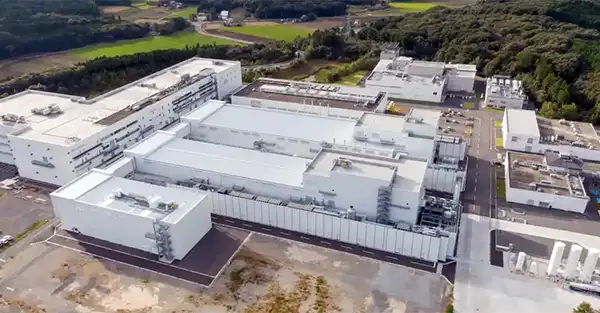
Solid-state batteries are shaping up to be one of the best inventions in battery technology for 2025 and beyond. Unlike traditional lithium-ion batteries used in most electric vehicles and gadgets today, solid-state batteries replace the flammable liquid or gel with a solid electrolyte. That small change makes a huge difference—they’re safer, more compact, last longer, charge faster, and perform better even in cold weather. These benefits are pushing solid-state tech closer to becoming the new standard in powering everything from EVs to smartphones.
Big car companies are already investing heavily in this future. Honda has launched a production line for all-solid-state EV batteries, claiming they’ll be 50% smaller. SAIC in China plans to begin mass production by 2026, while Nissan is aiming to release an EV with solid-state batteries by 2028. While the tech still faces challenges in cost and large-scale production, the momentum is building fast. As breakthroughs continue, solid-state batteries could revolutionize how we store and use energy across industries, not just in vehicles but in every corner of our lives.
Quantum Computing: From Theory to Real Impact
2025 has officially been declared the International Year of Quantum Science and Technology, and it’s clear why—quantum computing is finally starting to move from theory into real-world use. While still in its early stages, it’s already showing huge potential, especially in healthcare. For instance, IBM and Cleveland Clinic have teamed up to install the world’s first quantum computer for medical research. Their focus? Tackling complex drug discovery problems that even today’s best supercomputers struggle with—like simulating how molecules behave or how proteins fold. These breakthroughs could speed up the process of finding new medicines and treatments faster than ever before.
But quantum computing isn’t just for medicine. It’s also being explored in agriculture to improve fertilizer efficiency and crop yields, and in weather forecasting to better predict storms by analyzing massive datasets with incredible speed. Tech giants like Google, Microsoft, and Atom Computing are pushing things further—Google recently introduced its advanced Willow chip, and others are promising commercially available quantum systems as early as this year. While we’re not at the point where quantum computers are in every office or lab, the pace of progress suggests they’ll soon become a powerful force driving innovation across multiple industries.
Extended Reality (XR): The next dimension of innovation
Digitally generated worlds that can be linked to the physical world are referred to as extended reality, or XR. It functions as a sort of umbrella term for mixed reality (MR), augmented reality (AR), and virtual reality (VR). Let’s first see the definitions of these terms:
You are fully immersed in a digital world when you use Virtual reality (VR). Wearing a headset can make you feel as though you are exploring the ocean, walking on Mars, or inside a video game without ever leaving your room.
Digital objects are superimposed on top of the real world in Augmented reality (AR). Pokémon GO is a well-known example, where you can use your phone to see Pikachu on your street. AR is even used by Snapchat and Instagram filters to add amusing hats, ears, or facial effects.
By merging the digital and physical worlds, Mixed Reality (MR) takes things a step further. Imagine wearing special glasses that allow you to see your room while also being able to move a digital chair around it and play catch with a ball that is only in your headset.
Many significant facets of life are already utilizing extended reality, or XR. It helps people learn, work, and even heal; it’s not just about games or entertainment devices. Here are a few instances of modern applications for XR in 2025:
Healthcare
Before operating on actual patients, doctors use XR to rehearse surgeries in a secure virtual environment. By displaying 3D images of the human body, which are simpler to comprehend than flat pictures, it also aids in medical education. By going to serene virtual locations, patients can use XR for pain and stress relief or even for recovery exercises.
Education and Training
XR adds excitement to learning. Students can visit ancient cities, investigate the solar system, or view a 3D model of the human body. Before operating actual machinery, engineers, pilots, and even factory workers can receive training in XR, which saves money and ensures their safety.
Engineering and Manufacturing
Before they are constructed, designers can now view life-size models of vehicles, aircraft, or buildings using XR. This aids in their early error detection. While repairing machinery or operating robots to perform risky tasks from a safe distance, workers can also receive instructions via AR glasses.
Entertainment and Gaming
The most common use of XR is in games. Players can enter their favorite virtual reality environments and experience them as if they were physically there by wearing a VR headset. Even when at home, people can watch sporting events or concerts in XR and experience the atmosphere of being in a stadium.
Travel and Tourism
XR allows users to “visit” well-known sites, museums, or cities without ever leaving their homes. Imagine using a headset in your living room to explore the Great Wall of China or the pyramids of Egypt.
Pelage Pharmaceuticals PP405 – A Therapy to Reverse Balding
A topical, non-hormonal medication called PP405 is intended to revive dormant stem cells in hair follicles, thereby increasing hair density and growth. Although results may be limited in advanced cases where follicles have already developed scarring, early clinical trials have shown great promise.
Pelage Pharmaceuticals is awaiting additional trial results required for FDA approval, but the therapy’s promising performance suggests it could pave the way for a new class of regenerative hair-loss treatments. “It’s not covering up the symptoms, it’s targeting the underlying biology,” says the company’s chief medical officer, Christina Weng.
EufyMake E1 UV Printer – Bringing Textured UV Printing Home
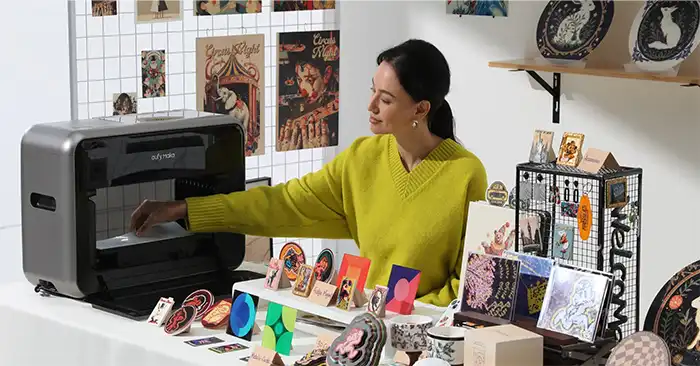
UV printing has historically only been used in industrial settings. It uses ultraviolet light to instantly cure specialty inks on materials like metal, wood, and acrylic. The EufyMake E1, created through what turned out to be the biggest online crowdfunding campaign in history, is helping to lower that barrier.
The company raised nearly $47 million to create the world’s first at-home UV printer—a device 90% smaller than conventional systems and capable of producing 3D textures on more than 300 materials. The E1 also offers users access to millions of customizable design templates.
Also Read:Open Printer: The Open-Source Inkjet Revolution Against DRM
According to Frank Zhu of Anker Innovations, the parent company of eufy, “the E1 enables hobbyists, small business owners, and entrepreneurs to personalize everyday items or even launch side ventures.”
You May Also Like: Unique but Simple Hackathon Project Ideas You Must Try in 2025
Best New Inventions 2025: A Future Full of Promise and Possibility
In a year marked by both challenge and change, the best inventions in science and technology 2025 have given us something powerful: hope. From quantum batteries that promise limitless energy to lab-grown organs that could end the wait for transplants, and even Ayurveda-inspired approaches to diseases like Parkinson’s – these breakthroughs are quietly shaping a world where health, sustainability, and innovation walk hand in hand.
Yes, 2025 will be remembered for many reasons – some heavy, some hopeful. But as we look ahead, it’s these human-driven innovations that remind us we’re capable of building a more peaceful, thoughtful, and connected world. A world where science not only solves problems but also heals, uplifts, and unites.
Which invention sparked your curiosity or gave you the most hope this year? Share your thoughts in the comments – we’d love to hear what excites you about the future.