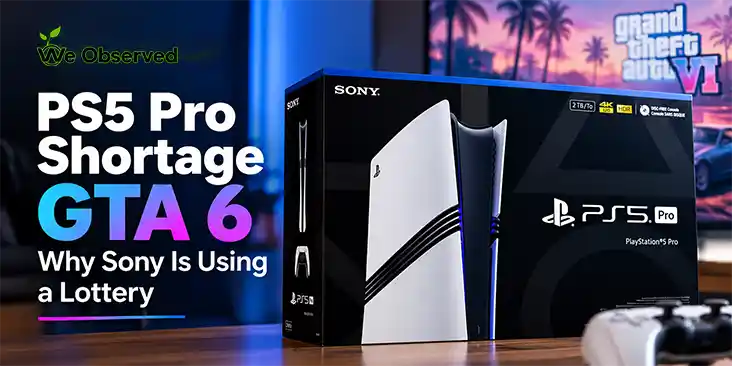
CMF, Nothing’s design-focused sub-brand, has entered the portable Bluetooth speaker market with two models: the CMF Speaker S and CMF Speaker M. Both combine colourful, customisable designs with Bluetooth 6.0, IP68 dust and water resistance, USB-C audio, and up to 18 hours of claimed playback. The main difference is what they are built to do: the compact Speaker S prioritises portability, while the larger Speaker M offers more output power and a dedicated woofer-and-tweeter setup.
But which one makes more sense for your desk, bedroom, travel bag, or weekend gathering? And are their shared features enough to make either a worthwhile purchase?
Here is a practical comparison of the specifications, features, prices, and everyday considerations that matter before you buy.
CMF Speaker M vs Speaker S: Quick Comparison
| Specification | CMF Speaker S | CMF Speaker M |
|---|---|---|
| Output power | 10W RMS | 35W RMS |
| Driver setup | 45mm full-range driver + 2 passive radiators | 70mm woofer + 16mm tweeter |
| Frequency response | 70Hz–20kHz | 60Hz–20kHz |
| Dimensions | 130.5 × 85 × 44mm | 220 × 85 × 54mm |
| Weight | 334g | 602g |
| Battery capacity | 2,600mAh | 4,900mAh |
| Claimed playback | Up to 18 hours | Up to 18 hours |
| Full charging time | Approximately 2.5 hours | Approximately 3 hours |
| Bluetooth | Bluetooth 6.0 | Bluetooth 6.0 |
| Wired audio | USB-C | USB-C |
| Water and dust resistance | IP68 | IP68 |
| Stereo pairing | Two Speaker S units | Two Speaker M units |
| Party Mode | Auracast | Auracast |
| Launch price (US) | $59 | $109 |
| Launch price (UK) | £49 | £99 |
| Launch price (Europe) | €59 | €99 |
Specifications and prices are based on CMF’s published product information and launch details. Actual local pricing, availability, and offers may differ.
Also check:GTA 6: Release Date, Price, Leaks & What to Know
What Is the Difference Between CMF Speaker M and Speaker S?
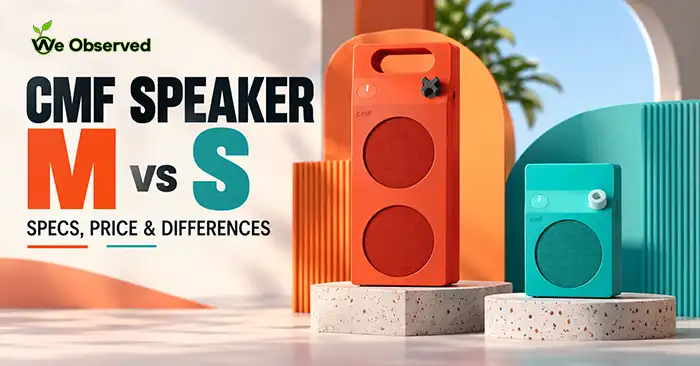
The most important difference is the audio hardware.
CMF Speaker S: A compact speaker for personal listening
The CMF Speaker S uses a 45mm full-range driver rated at 10W RMS, supported by two passive radiators that help reinforce low-frequency output. Its frequency response is rated from 70Hz to 20kHz.
At 334g, it is the lighter option and is designed to fit more naturally into a small everyday setup. Its compact body, utility hook, and removable front panel make it suitable for people who want a portable speaker that also looks distinctive on a desk or shelf.
Who should consider it?
- Students who want music in a hostel room or study space.
- People who listen to music while working at a desk.
- Travellers who want a relatively light speaker.
- Buyers who value compact dimensions and customisable design.
- Anyone who wants to spend less while still getting the core connectivity features.
The limitation is straightforward: 10W RMS output is not equivalent to the 35W offered by Speaker M. If you regularly play music in a large room or host gatherings, the larger model deserves closer consideration.
Also check:Xbox Game Pass October 2026: 9 New Games & More
CMF Speaker M: More output for a bigger listening space
The CMF Speaker M uses a two-driver arrangement: a 70mm woofer rated at 25W RMS and a 16mm tweeter rated at 10W RMS. Together, they deliver 35W RMS output across a stated frequency range of 60Hz to 20kHz.
Separating low and high frequencies between dedicated drivers gives the speaker a different hardware foundation from the single-driver Speaker S. The larger woofer is designed to handle bass, while the tweeter handles higher frequencies. The enclosure also provides more room for the audio hardware.
At 602g, the Speaker M is still portable, but it is considerably larger and heavier than its sibling.
Who should consider it?
- People who listen in living rooms or larger bedrooms.
- Users who regularly host friends or small gatherings.
- Buyers who want more output headroom.
- People who watch films or listen to music from a laptop.
- Those who prefer a two-driver system over the smallest possible design.
The M costs substantially more, so the extra output matters only if your listening habits can make use of it.
Important: More watts do not automatically mean better sound quality. Driver design, tuning, distortion, room acoustics, and listening volume all affect the result. A hands-on comparison is still needed to determine which model sounds better for a particular type of music.
Both Speakers Offer Up to 18 Hours of Battery Life
One of the more interesting details is that CMF claims up to 18 hours of playback for both speakers, despite their different sizes and battery capacities.
- Speaker S: 2,600mAh battery, approximately 2.5 hours to charge fully.
- Speaker M: 4,900mAh battery, approximately 3 hours to charge fully.
- Both: A 10-minute charge is advertised to provide up to one hour of playback under the specified test conditions.
The company bases its playback figure on controlled testing at 50% volume, with Ultra Bass enabled and other stated settings. Real-world battery life can be lower depending on volume, audio content, connectivity conditions, and feature usage.
This means you should not automatically expect the M to last longer simply because it has a larger battery. Its higher-output audio hardware and the way you use it also affect power consumption.
For everyday use, both models have a promising advertised endurance figure. However, independent battery testing over repeated listening sessions would be needed to establish how close they get to 18 hours in normal use.
Must Read:Buying Caged Animals to Save Them? The Brutal Truth
IP68 Protection: What Does It Actually Mean?
Both speakers carry an IP68 rating for dust and water resistance. CMF says they have been tested for immersion in fresh water at depths of up to 1.5 metres for up to 30 minutes under specified laboratory conditions.
That makes the protection useful for situations involving dust, sand, rain, and accidental splashes. It is an attractive feature for people who listen outdoors, take a speaker on trips, or use it around a pool.
But IP68 does not mean a speaker is indestructible or that every kind of liquid exposure is safe.
Water resistance can deteriorate with wear, damage, or improper handling. The manufacturer also advises against deliberately exposing the product to conditions beyond its stated test parameters.
For buyers, the practical takeaway is simple: the rating offers reassurance against common outdoor mishaps, but it should not be treated as permission to leave the speaker underwater or ignore its care instructions.
Bluetooth 6.0, USB-C Audio and Auracast
The two speakers share several connectivity features that are more useful than a specification sheet might initially suggest.
Bluetooth 6.0 and dual-device connectivity
Both models use Bluetooth 6.0 and support connections to two Bluetooth audio sources. This can make switching between a phone and laptop more convenient without repeatedly disconnecting and pairing devices.
CMF advertises a wireless range of over 100 metres in open space. That figure represents an idealised environment, not a guaranteed indoor range. Walls, interference, device placement, and other obstacles can reduce the distance substantially.
USB-C audio for laptops and gaming
Both speakers support digital audio over USB-C, with CMF advertising latency below 60 milliseconds for this connection.
That makes wired USB-C audio worth considering if you want to use the speaker with a compatible laptop, watch videos, or play games where synchronised sound matters.
However, the USB-C latency figure should not be confused with Bluetooth latency. CMF’s own technical notes show that wireless latency depends on the codec, device, software, and environment. If gaming responsiveness is a priority, a wired connection is the safer choice where supported.
Auracast Party Mode
Party Mode uses Auracast to synchronise playback across compatible speakers. This is intended to let multiple speakers play the same audio together, increasing coverage across a space.
Stereo Mode works differently. It pairs two identical Speaker S units or two identical Speaker M units as separate left and right channels, creating a wider stereo presentation.
These distinctions matter:
- Stereo Mode: Two matching speakers create left and right channels.
- Party Mode: Compatible speakers play synchronised audio together.
- Dual-device connection: One speaker can stay connected to two audio sources.
Do not assume that Stereo Mode will pair a Speaker S with a Speaker M. CMF specifies pairing two identical units for stereo.
NFC and Fast Pair
Both models support NFC tap-to-pair and compatible fast-pairing features for supported devices. They also work with the Nothing X app for sound customisation and supported controls.
Feature availability can vary by phone, operating system, and region. Buyers should check compatibility if they rely on a particular pairing workflow.
Customisable Design: More Than Four Colour Options
CMF is putting a noticeable amount of attention into the physical design.
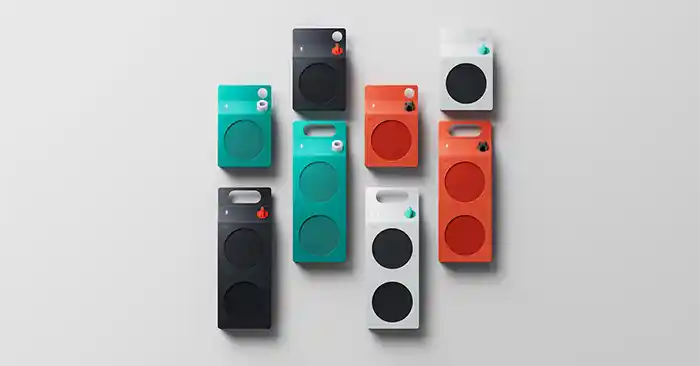
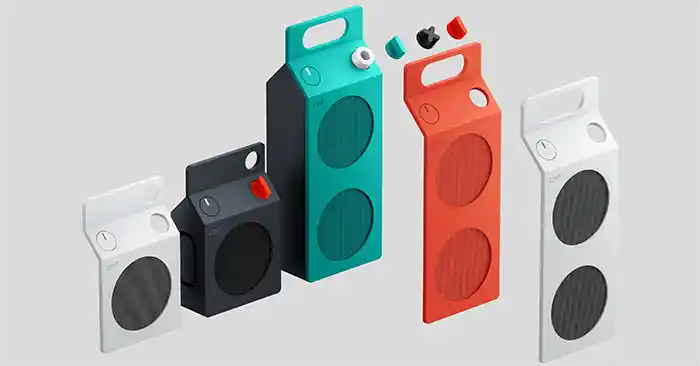
Both models have an upright shape inspired by a milk carton and come in white, dark grey, orange, and turquoise. Their front panels and volume knobs can be removed using the rear unlock switch, allowing users to swap compatible components or customise them.
CMF also provides guidance for 3D-printing replacement panels and knobs, giving users another way to personalise the speaker.
This is a useful distinction in a category where many portable speakers use similar rounded cylinders or fabric-covered bodies. The design is not necessarily a sound-quality advantage, but it gives the products a recognisable identity.
Speaker S also includes a utility hook, while Speaker M has a built-in handle, reinforcing their slightly different portability priorities.
There is one practical consideration: removable components need to be reinstalled correctly. CMF advises that improper reinstallation may affect acoustic performance or other functions. Customisation should not come at the expense of correct assembly.
Must-Check: PS5 Pro Shortage GTA 6: Why Sony Is Using a Lottery
Sound Features: Ultra Bass, Wide Soundstage and Custom EQ
Both speakers include several modes designed to adjust how music sounds.
- Ultra Bass: Adds more low-frequency impact.
- Wide Soundstage: Aims to create a wider sense of space and separation.
- Adaptive Tuning: Adjusts equalisation based on the type of audio.
- Custom EQ: Offers Balanced, More Bass, More Treble, and Voice presets, plus manual adjustment.
- Night Mode: Reduces overall energy and low-frequency output, limiting maximum loudness to around 60% of Standard Mode.
These features give users more control over listening preferences. For example, someone listening to podcasts may prefer the Voice preset, while a bass-heavy playlist may benefit from Ultra Bass.
Still, software modes cannot remove the physical limitations of a small enclosure. If you want deeper bass at high volume, Speaker M’s larger driver system gives it a hardware advantage on paper. Whether that advantage translates into a better overall listening experience needs direct testing.
CMF Speaker M vs Speaker S: Which One Offers Better Value?
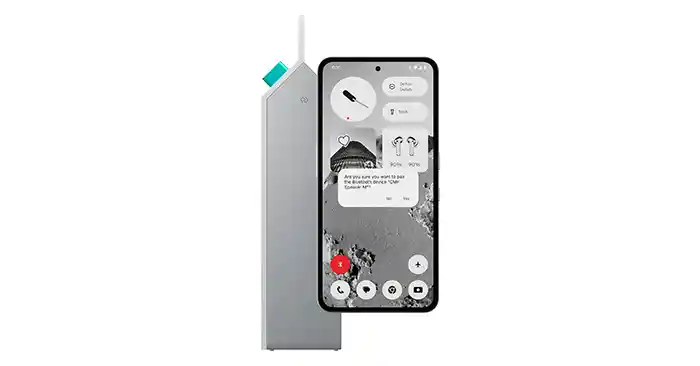
The answer depends less on the feature checklist and more on where and how you listen.
Choose CMF Speaker S if:
- You want a compact, lighter speaker.
- Most of your listening happens at a desk, bedside, or in a small room.
- You value the hook and colourful customisable design.
- You want the lower launch price.
- You do not regularly need high output for a large space.
Choose CMF Speaker M if:
- You want substantially more rated output power.
- You listen in a living room or host small gatherings.
- You want a dedicated woofer-and-tweeter arrangement.
- You are willing to carry a heavier speaker.
- You can justify the higher price through your actual usage.
Which one should most people buy?
For someone who mainly listens alone while working, studying, or relaxing, the Speaker S looks like the more practical starting point. It offers the same headline battery claim, IP68 rating, Bluetooth version, USB-C audio, and core software features in a smaller body.
For someone who wants a speaker to fill a room or support social listening, the Speaker M is the more logical choice because it offers 35W RMS output and a dedicated two-driver setup.
Neither is automatically the better buy for everyone. If sound quality is your highest priority, wait for independent listening tests or audition both models if possible. Specifications can tell you what hardware is inside, but not conclusively how it will sound with your favourite music.
Price and Availability
CMF announced the speakers at the following launch prices:
| Model | US | UK | Europe | Official Page |
|---|---|---|---|---|
| CMF Speaker S | $59 | £49 | €59 | Visit Here |
| CMF Speaker M | $109 | £99 | €99 | Visit Here |
The products are listed through Nothing’s official stores and selected retail partners. Colour options include white, dark grey, orange, and turquoise, although availability may vary by market and stock.
For Indian buyers, do not rely on a direct currency conversion as the final retail price. Check the official pagesfor current pricing, stock, and any local offers.
You may also like:Samsung Galaxy S27 Ultra Leaks: What We Know So Far
Frequently Asked Questions
Is CMF Speaker M louder than Speaker S?
Speaker M is rated at 35W RMS, compared with 10W RMS for Speaker S. That gives the M considerably more rated output power, though actual loudness and sound quality also depend on tuning and acoustic conditions.
Do both CMF speakers support IP68?
Yes. Both carry an IP68 rating. CMF’s stated test conditions include immersion in fresh water up to 1.5 metres for up to 30 minutes. Water and dust resistance are not permanent and can decline with wear or damage.
Do CMF Speaker M and Speaker S support stereo pairing?
Yes. Two identical Speaker S units or two identical Speaker M units can be paired for left and right stereo channels. Party Mode uses Auracast to synchronise playback across compatible speakers.
Can I connect either speaker to a laptop using USB-C?
Yes. Both support USB-C digital audio, with CMF advertising latency below 60 milliseconds. Compatibility depends on the connected device and setup.
Do both speakers really last 18 hours?
CMF advertises up to 18 hours for both models under specified laboratory conditions, including 50% volume and Ultra Bass enabled. Actual playback time varies with volume, audio, wireless conditions, and use.
Is the CMF Speaker S good for gaming?
Its USB-C audio support and advertised low-latency wired playback make it worth considering for laptop gaming. However, it is not a substitute for a dedicated gaming headset if you need precise positional audio, a microphone, or private listening.
Final Verdict
The CMF Speaker S and Speaker M share a surprisingly broad feature set for two speakers at different price points. Bluetooth 6.0, IP68 protection, USB-C audio, custom EQ, Auracast Party Mode, and a claimed 18 hours of playback are available across the range.
The decision comes down to the trade-off between portability and output.
CMF Speaker S is the more compact everyday companion. CMF Speaker M is the more powerful option for room-filling listening.
If you spend most of your time at a desk or want something easy to carry, the S makes sense. If you want more output for a shared space, the M is worth the extra cost.
The feature lists are promising, but the final buying decision should still depend on real-world sound quality, battery performance, and local pricing. Those are the details that determine whether a speaker becomes part of your daily routine or just another attractive gadget on a shelf.