
If you have ever had an inkjet printer, then you likely have experienced the “great cartridge conspiracy”, in which your printer is having a tantrum because the ink cartridge is not “original” enough, or worse, because you had the audacity to refill it yourself. HP, Canon, Epson, take your pick; they have all been accused of saddling customers with high-cost inks or pointing them towards perpetual subscription plans. We’ve all asked ourselves at some point: “Why should printer ink be more expensive than decent whisky?”
In comes Open Printer, a Parisian-born renegade project to liberate us from DRM chains, pricey cartridges, and disposable hardware culture. It’s open-source, fixable, customizable, and doesn’t dictate to you with subscription pop-ups. For the first time ever, a printer is actually created for the user, not the manufacturer’s profit line. It can truly be an open-source printer.
Sounds too good to be real? Let’s take a closer look.
What is the Open Printer?
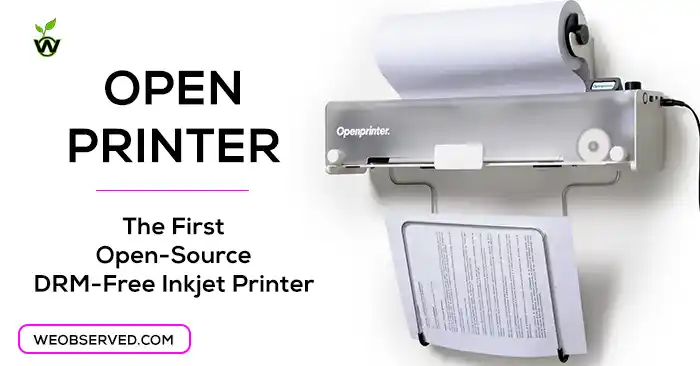
The Open Printer is an open-source inkjet printer, conceived by Paris-based design firm Open Tools. It’s not merely another device; it’s a way of thinking. Every bolt, nut, circuit, and line of firmware is open-licensed under Creative Commons. That is to say, not only can you repair it yourself, but you can also modify, upgrade, and even remix the design.
Also Check:Nothing Ear (Open) Review: Style, Comfort & Clear Sound
It is like the “LEGO set” of printers. Rather than being subjected to the cost and DRM-locking of buying new, pricey cartridges, you can refill the ink you already have on hand, stretch out its lifespan, and even help improve it as a member of the open-source community.
And the icing on the cake: it’s wall-mountable. Yes, your printer can finally hang like some piece of contemporary art spewing out your tax forms.
How Does it Work?
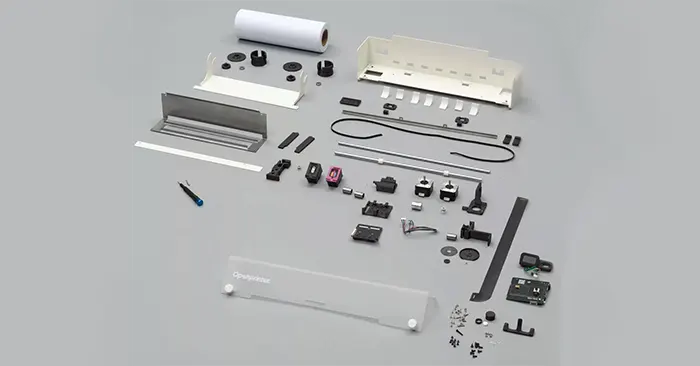
The printer runs on HP 63 (US) and HP 302 (Europe) cartridges, which you can refill with no tricks, no coercive buying. It means a DRM-free printer. Its firmware will never unexpectedly “update” to prevent third-party inks from being used.
On the technical front:
- Print resolution: 600 dpi black & white, 1200 dpi colour (adequate for office and creative purposes).
- Paper support: Typical formats such as A4, A3, Letter, Tabloid, and roll papers up to 11 inches (27 mm European width) featuring an automatic cutter. Yes, it’s capable of cutting banners like a professional.
- Brain of the printer: Raspberry Pi Zero W as the central board, and an STM32 MCU for managing cartridges.
- Connectivity: USB-C, USB-A (for pendrives), Wi-Fi 5, Bluetooth 4.1, compatible with Windows, macOS, Linux, Android, and iOS. It even supports the open-source CUPS print server.
- User interface: A modest 1.47-inch TFT LCD screen and a jog wheel. Old-school, but dependable.
Must Check:Portronics Trifusion Review: Almost the Perfect 3-in-1 Speaker
Dimensions? Approximately the same size as a small keyboard (50 x 10 x 11 cm). So this modular printer won’t take over your desk like that giant office copier.
Why It Matters?
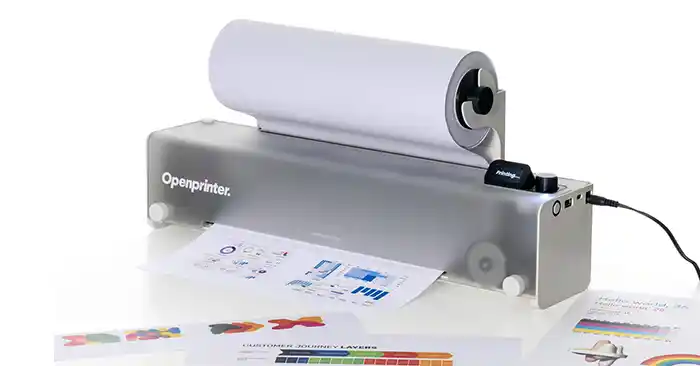
For decades, printer manufacturers have serviced consumers like ATM machines. HP has famously shut down refilled cartridges using DRM (Digital Rights Management). Even Brother, once a champion of the friendly alternative, has been criticized for playing by the same playbook.
The Open Printer matters because it refuses to allow this exploitative practice. It shows that printers can be:
- Cheap to keep in use (refill ink rather than purchasing new cartridges).
- Longevity-driven (repairable parts rather than planned obsolescence).
- Actually user-owned (no surprise lock-ins via software updates).
It’s essentially the anti-HP or the best alternative to HP printer.
Future Impact
If this crowdfunding campaign is successful, it can trigger a stealth revolution. Imagine a world where:
- Makers, artists, and engineers come together to upgrade a printer’s firmware.
- Local repair shops make their own replacement parts rather than discarding machines.
- Schools, offices, and even home users save thousands of rupees in the long run.
It might even force major manufacturers to reconsider their greed-based models. At a minimum, it will show that customers are happy to support products that value their autonomy.
And let’s face it, if open-source communities can develop Linux, Wikipedia, and Blender, why can’t they develop the world’s most democratic printer?
Must Check:Best New Inventions 2025 in Science, Technology and Life
Benefits to Real Customers
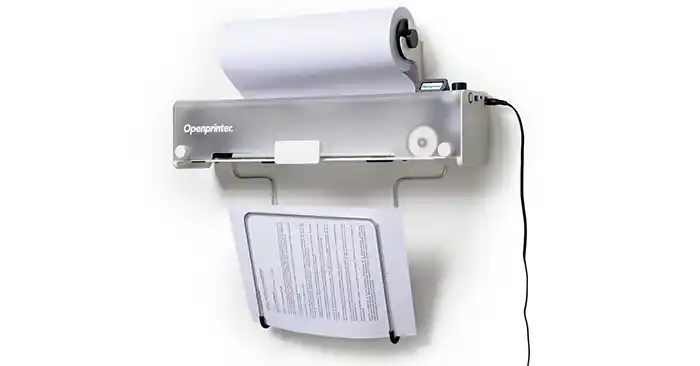
Here’s what this inkjet printer without subscription means to you and me:
- No more “low ink” lies: Fill up the cartridge, print on.
- Save money on expenses: Generic ink bottles are cheap as chips versus ₹2,000+ cartridges.
- Green: Repair, reuse, and refill rather than dumping plastic bricks into landfills.
- Flexibility: From A4 reports to roll-up banners for your college fest, it’s possible.
- Community power: Bugs, updates, and features will develop through collective work, not corporate edicts.
For Indian customers in particular, where the cost of the ink easily dwarfs the cost of the printer, this could be a complete game-changer.
Where and When to Buy?
The project is poised to launch on crowdfunding site Crowd Supply, though pricing and funding target aren’t yet announced. If you’re interested, you can sign up on their Crowd Supply project page to be notified when it goes live.
Crowd Supply has a good track record with open hardware campaigns, so this open hardware printer isn’t just vaporware. Given the specs, expect early-bird backers to grab it at a price far more reasonable than what you’d pay for three “official” ink cartridges.
Check Out:Top 12 Walking Pads: Best Choices for a Healthier Lifestyle
Conclusion
The Open Printer is not merely another device; it’s a statement of defiance against decades of printer industry exploitation. In putting power back in the hands of people, it breaks the poisonous cycle of DRM, forced obsolescence, and overpriced consumables.
If it succeeds, it could be the first ever people’s printer, one that will last longer, cost less, respect your freedom, and not penalize you for being practical.
Or, as I prefer to refer to it: the printer Gandhiji would approve of, plain, fixable, and opposed to exploitation. So, if you’ve ever cursed your printer during a dead-of-night work deadline, watch this project. The revolution has started, and it’s ink-based.




It seems promissing, but need polishing.