
When it comes to organizing technical event ideas for college students, it’s all about making learning exciting and engaging. From Agentic AI hackathons to spatial computing challenges, these events allow students to dive into the world of technology, explore cutting-edge tools, and work together as a team. Whether you’re looking for technical events ideas for freshers or experienced students, these activities allow everyone to learn, grow, and build real-world portfolios.
What are the best technical event ideas for 2026?
The most impactful technical events for 2026 focus on practical, emerging technologies. Top ideas include Generative AI hackathons, Capture the Flag (CTF) cybersecurity challenges, Prompt Engineering code sprints, and Spatial Computing (AR/VR) design contests. These events prioritize hands-on problem-solving over passive learning.
In this article, we’ll explore 20 of the best technical event ideas for 2026, designed to cater to students, especially those studying Computer Science Engineering (CSE). If you’re a CSE student, these technical events ideas for CSE will help you sharpen your skills, improve your knowledge, and get hands-on experience with the latest tech stack. From LLM fine-tuning to advanced robotics, these events will ensure that students of all levels can participate, learn, and enhance their future career prospects.
Whether you’re a high school student eager to jump into tech or a college student planning your next tech fest, these event ideas will make your journey into the world of technology both fun and educational!
20 Best Technical Events Ideas 2026
Below we have prepared a list of the 20 Best Technical Events ideas for 2026 for consideration:
1. Generative AI & Web3 Hackathons
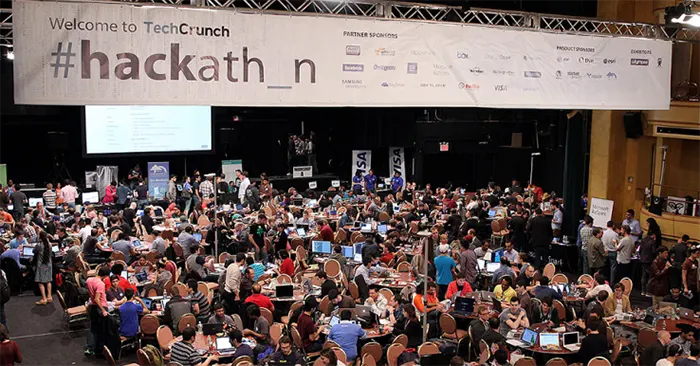
Benefits to Students: Hackathons have evolved. Today, they help students learn how to solve real-world problems using Large Language Models (LLMs) and decentralized tech. They boost creativity, encourage API integration, and prepare students for fast-paced, modern work environments.
Guidance for Organizing: Choose a highly relevant theme (e.g., AI in Healthcare or Blockchain for Climate), set a time limit of 24-48 hours, and provide API access credits for platforms like OpenAI or Hugging Face.
Objective: Encourages teamwork, rapid prototyping, and hands-on integration of emerging tech.
Take a Look At: Unique but Simple Hackathon Project Ideas You Must Try in 2026
2. Prompt Engineering & Code Sprints
Benefits to Students: With AI assisting in code generation, these contests now test how well a student can command AI tools to build bug-free software quickly, alongside traditional algorithmic problem-solving.
Guidance for Organizing: Combine traditional competitive programming platforms with a “Prompt Battle” round, where students must generate a specific UI or solve a complex logic puzzle using only AI prompts.
Objective: It will be the best tech event idea for CSE students looking to adapt to the new age of AI-assisted software development.
3. Spatial Computing (AR/VR) and AI Bootcamps

Benefits to Students: Workshops give students practical experience with trending hardware like Vision Pro/Meta Quest ecosystems and advanced Machine Learning models.
Guidance for Organizing: Invite industry experts to teach specific frameworks (like Unity for Spatial Computing or PyTorch for AI). Keep the workshops interactive by having students build a functioning mini-app by the end of the session.
Objective: Helps students learn highly marketable tech skills by actively building, rather than just listening.
Also Check: Instagram Teen Accounts: Features and Parental Controls
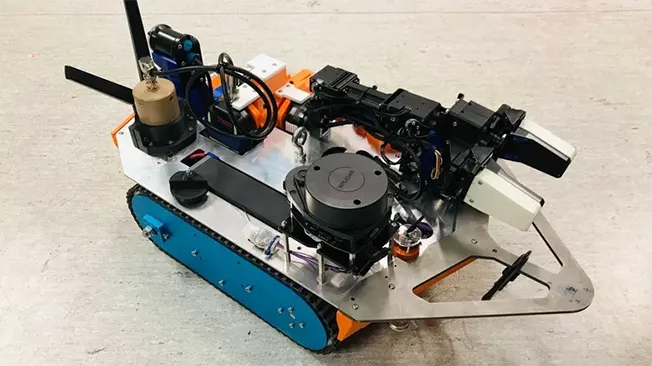
4. Autonomous Robotics and Drone Circuit Design
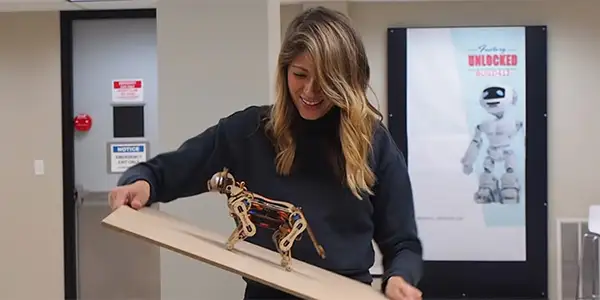
Benefits to Students: Modern robotics is all about autonomy. These competitions teach students how to integrate physical hardware with computer vision and sensor data.
Guidance for Organizing: Set a challenge that requires automation, such as a drone navigating an obstacle course using only onboard cameras, rather than remote control.
Objective: Develop advanced engineering skills that bridge the gap between software programming and physical hardware.
5. Capture the Flag (CTF) – AI Cybersecurity Challenges

Benefits to Students: With cyber threats becoming automated, CTF events are more critical than ever. They help students understand vulnerabilities in web apps, APIs, and even LLMs (prompt injection).
Guidance for Organizing: Set up a secure, isolated network with simulated vulnerabilities. Include a mix of traditional cryptography puzzles and modern challenges like securing an AI chatbot against data extraction.
Objective: Build aggressive problem-solving skills in ethical hacking and cloud security.
6. Cross-Platform App Development Contests

Benefits to Students: These contests push students to use frameworks like Flutter or React Native to deploy applications simultaneously across mobile, web, and desktop.
Guidance for Organizing: Define a socially impactful theme (e.g., personal carbon tracking or mental health resources). Evaluate the projects based on UX/UI design, load times, and cross-platform stability.
Objective: Mimics real-world startup environments where shipping functional, beautiful products quickly is key.
Also Check: 5 Best Water Chillers for Cold Plunge on Amazon.com
7. Tech Talks and Founder Seminars
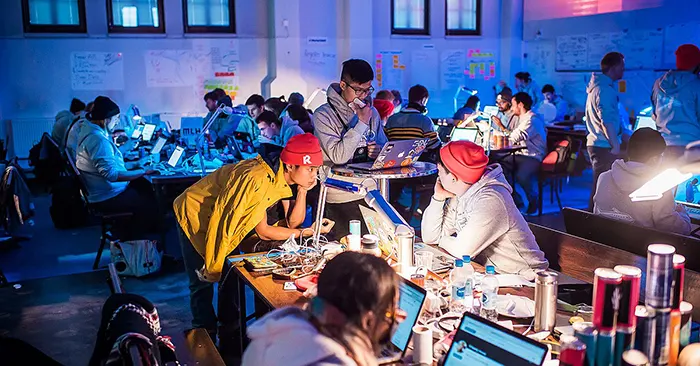
Benefits to Students: Hearing directly from startup founders and tech leaders provides a realistic view of the industry, cutting through the academic theory.
Guidance for Organizing: Move away from generic lectures and host “Fireside Chats” focusing on failure, pivoting, and how to survive the current tech job market. Leave heavy room for audience Q&A.
Objective: Gives students a realistic perspective on industry demands and intense networking opportunities.
8. Open Source Contribution Exhibitions
Benefits to Students: Instead of isolated projects, this event encourages students to showcase their merged pull requests on major open-source platforms like GitHub.
Guidance for Organizing: Students present what repository they contributed to, the bug they fixed or feature they added, and the code review process they underwent.
Objective: Teaches version control, collaborative coding, and how to read massive existing codebases.
9. Startup Pitching and Pre-Seed Challenges
Benefits to Students: Inspires entrepreneurship by forcing students to think about the business model, not just the code.
Guidance for Organizing: Setup a “Shark Tank” style panel. Students must present their Minimum Viable Product (MVP), user acquisition strategy, and potential revenue models within 5 minutes.
Objective: Bridges the gap between technical engineering and executive business strategy.
Must Read: Friend AI Necklace: Your New Friend to Combat Loneliness
10. Data Science and Predictive Analytics Challenges

Benefits to Students: Data is the new oil, and this event teaches students how to clean, process, and extract actionable insights from massive, messy datasets.
Guidance for Organizing: Provide a complex, real-world dataset (like traffic patterns or e-commerce buying habits). Teams must build models to predict future trends and visualize the data in a clear dashboard.
Objective: Sharpens data visualization and algorithmic forecasting skills.
11. Unreal Engine & Unity Game Jams

Benefits to Students: Game dev pushes the limits of system resources and mathematical rendering, teaching highly optimized C++ or C# programming.
Guidance for Organizing: Announce a surprise theme at the start of a 48-hour window. Teams must build a playable level, handling lighting, physics, and character mechanics.
Objective: Fosters intense creative problem-solving and highly technical rendering skills.
12. IoT (Internet of Things) Innovation Challenges
Benefits to Students: Teaches the integration of microcontrollers (like Raspberry Pi or Arduino) with cloud services to create “smart” devices.
Guidance for Organizing: Have students build devices that solve campus problems, such as a smart-parking sensor system for college lots or automated greenhouse monitors.
Objective: Build hands-on skills in hardware programming, network protocols, and cloud computing.
Also Read: Minisopuru DisplayLink Docking Station Review : Best Multi-Port Hub?
13. Technical Quizzes and Architecture Trivia
Benefits to Students: A low-barrier event that tests core knowledge of operating systems, system design, and tech history.
Guidance for Organizing: Use interactive tools like Kahoot! to run real-time quizzes on topics ranging from basic HTML to complex cloud architecture designs.
Objective: Tests foundational tech knowledge in a high-energy, fun environment.
14. Alumni Tech Mixers and Meetups
Benefits to Students: Bypasses traditional job boards by allowing students to network directly with college alumni who are now hiring managers or senior engineers.
Guidance for Organizing: Keep it informal. Provide refreshments and set up different “zones” based on industry (e.g., FinTech, EdTech, Game Dev) so students can easily find relevant mentors.
Objective: Creates direct talent pipelines and mentorship opportunities.
15. Research Paper Symposiums

Benefits to Students: Crucial for students aiming for Master’s programs or PhDs. It hones academic writing, peer review, and defense skills.
Guidance for Organizing: Students submit formal research papers (e.g., an analysis of a new machine learning algorithm). They must defend their findings in front of a panel of professors.
Objective: Develops deep academic rigor and formal public speaking abilities.
Must Check: 12 Top Walking Pads: Best Choices for a Healthier Lifestyle
16. 3D Printing and Industrial CAD Contests

Benefits to Students: Moving beyond simple plastic trinkets, this event focuses on functional, load-bearing parts used in mechanical engineering.
Guidance for Organizing: Provide a specific engineering problem (like designing a custom chassis for an RC car) and have students CAD and physically print the solution to test its structural integrity.
Objective: Promotes advanced mechanical design, spatial reasoning, and rapid manufacturing.
By organizing these modernized events, colleges can give students a platform to explore, learn, and develop the exact skills that top tech companies are demanding in 2026.
17. AI Agent Hackathons (Agentic AI Frameworks)
Benefits to Students: The tech industry has moved past basic chatbots. This event teaches students how to build “Agentic AI” systems—autonomous AI agents capable of planning, executing multi-step tasks, and using external tools to solve complex enterprise problems.
Guidance for Organizing: Task teams with building an autonomous workflow (e.g., an AI research agent that scans market data, drafts reports, and automatically emails them). Provide access to orchestration frameworks like LangChain, CrewAI, or AutoGen.
Objective: Teaches advanced system logic, API orchestration, and autonomous software engineering design.
18. TinyML & Edge AI Engineering Contests
Benefits to Students: Running massive AI models in the cloud is expensive. This competition exposes students to the booming field of TinyML, where Machine Learning models are shrunk and optimized to run locally on low-power microcontrollers and edge hardware.
Guidance for Organizing: Provide students with hardware kits (like Arduino Nano 33 BLE or Raspberry Pi Pico) and challenge them to deploy a highly optimized computer vision or audio recognition model that operates entirely offline.
Objective: Bridges data science with hardware limitations, teaching memory optimization and localized edge processing.
19. Green Computing & Cloud Carbon Audits
Benefits to Students: With massive data centers powering global tech, sustainability in engineering is a priority for tech giants. This event trains students to optimize messy codebases and cloud architecture to run with maximum computational and energy efficiency.
Guidance for Organizing: Provide teams with an unoptimized software system or a high-compute backend script. Challenge them to rewrite the code, optimize database queries, or refactor the architecture to minimize server CPU usage and lower its virtual carbon footprint.
Objective: Teaches deep code optimization, algorithmic efficiency, and sustainable cloud resource management.
20. Zero-Knowledge (ZK) Cryptography & Privacy Sprints
Benefits to Students: As digital data privacy laws tighten globally, cryptography is a highly lucrative skill. This sprint teaches students how to use Zero-Knowledge Proofs (ZKPs)—a cryptographic technology that allows data to be verified without revealing the underlying private data itself.
Guidance for Organizing: Set up math and coding challenges where students must build or integrate basic ZK protocols (like verifying a user is over 18 without revealing their actual date of birth). Provide software toolkits like Circom or ZoKrates.
Objective: Sharpens advanced mathematical logic, backend data privacy design, and cutting-edge security practices.
Also Check: Best New Inventions : Making Life Easier
Conclusion
In conclusion, participating in innovation events and technical events like Agentic Hackathons, Prompt Sprints, AI Bootcamps, and Drone competitions can open up exciting opportunities for students. These activities not only help you sharpen your technical skills for the modern job market but also encourage teamwork, creativity, and the ability to adapt to rapid technological shifts. By being part of such events, you’ll build a portfolio of real-world projects, expand your network, and build a strong foundation for your future in technology.
Whether you’re organizing or attending a tech fest, these 2026-optimized technical event ideas will keep you ahead of the curve. Don’t miss out on the chance to participate in these tech fest ideas—they are a great way to showcase your talents, challenge yourself, and take a massive step closer to your career goals. Dive in and start building!